Research at the university
Research Database: Projects
Forschungsprojekte (253)
Women remain underrepresented in the start-up scene, and existing research is largely informed by the experiences and characteristics of men. Consequently, studies often overlook the unique challenges women face, such as taking on more care work and dealing with different pressures in their personal and professional lives. Furthermore, despite their relevance to entrepreneurial success, health-related factors have received little attention. ALINA GERKEs doctoral project investigates how female entrepreneurs can achieve long-term success while maintaining their health. It examines which personal characteristics are associated with success and how their relevance shifts across the different phases of the entrepreneurial journey. It also considers the impact of professional and private life demands on both objective outcomes and subjective perceptions of success.

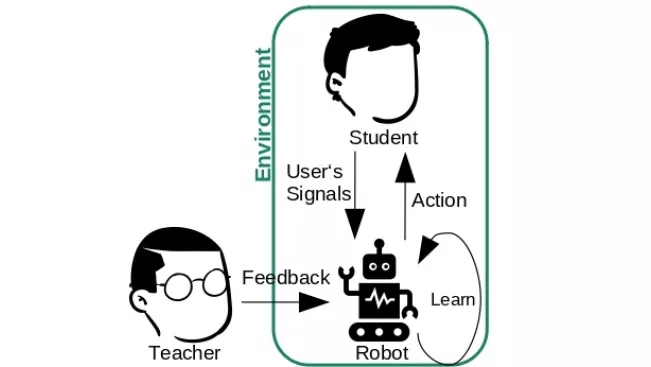
Currently, several industries and the public sector in Germany are facing the problem of the shortage of skilled human resources. Thus, it is needed to support different professions to increase the efficiency of the provided services. Various studies demonstrate that robots are able to support different user groups, e.g. elderly individuals or students, thereby easing the workload of skilled workers, e.g. caregivers or teachers. In this work, MICHAL STOLARZ chooses to support the education sector to meet the shortage of teachers. He develops an adaptive robot assisting international students in learning the German language and investigates its suitability from the student's point of view. In this approach, the robot learns how to adapt nonverbal responses for the student based on two information sources: (i) implicit student signals (e.g. engagement, emotions, tiredness), and (ii) teacher's explicit feedback (e.g. given through a tablet).
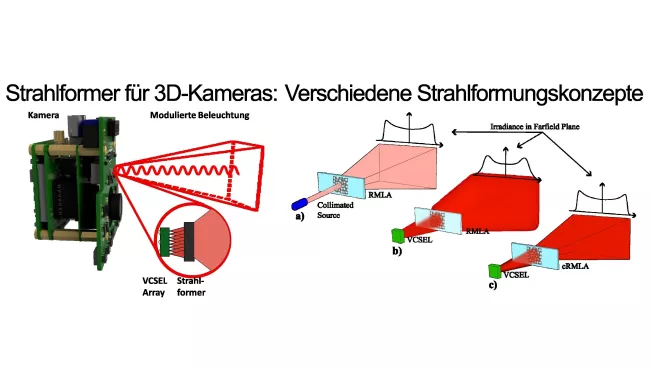
Lighting plays a crucial role in modern 3D camera systems that actively work with light. The aim of ELIAS ELLINGEN's doctoral thesis is to develop compact and efficient optics that specifically adapt the emitted light to the requirements of the respective system, for example, to illuminate certain areas more brightly or to project patterns for distance measurement. To this end, he is investigating various methods of beam shaping, such as microstructured lenses or computer-generated holograms. Simulations, prototypes and experiments are being used to identify the advantages and disadvantages of each approach. He is also investigating dynamic beam shapers that can project different patterns adapted to the measurement task. The long-term goal is to develop tailor-made lighting solutions for various applications, e.g. in robotics or industrial quality assurance, that improve the accuracy and efficiency of 3D measurement systems.
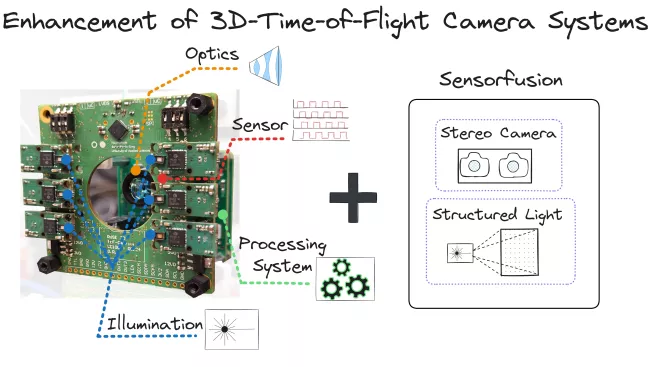
3D camera systems are considered a key technology for numerous modern applications, from product inspection to robotics and automated vehicles. Time-of-flight (ToF) cameras in particular enable fast and precise measurements in robust, compact and cost-effective systems. However, current ToF cameras have weaknesses when it comes to capturing moving or highly reflective objects. This limits their potential applications, especially in safety-critical applications. BASTIAN STAHL's doctoral project aims to significantly improve the accuracy and reliability of such systems. To this end, a dedicated measurement platform is being developed that will enable independent investigation and optimisation of the algorithms, optics and laser-based lighting components. In addition, research is being conducted into how ToF cameras can be combined with other sensor technologies, such as stereo cameras, to compensate for the respective weaknesses of individual methods. The goal is to develop a robust 3D camera system that can also be used reliably in safety-critical applications.
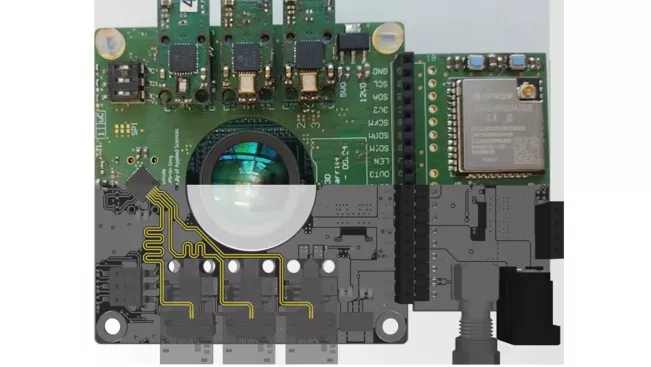
Time-of-flight (ToF) technology enables precise distance measurement by detecting the transit time of light signals. Its versatility and ability to provide depth information in real time are constantly opening up new applications. This work pursues a novel approach to improve the range and reliability of measurement. Through dynamic adaptation of the illumination using malleable beam profiles and optimised sensor control, the light distribution is to be ideally adapted to the scene. A hardware platform with multiple light sources that can be operated simultaneously or alternatively and integrated beam shapers is being designed. The aim of DANIEL RÖTHGEN's doctoral thesis is to develop a ToF camera with extended range and improved spatial and temporal resolution that enables reliable measurements even in dynamic environments. A validation sample is being built and comprehensively characterised.
The epithelial sodium channel (ENaC), composed of α or δ, β, and γ subunits, is a constitutively active, sodium-selective ion channel essential for maintaining fluid and electrolyte homeostasis. Dysregulation of ENaC function is associated with diseases, including hypertension and cystic fibrosis. ENaC activity is tightly controlled by intracellular proteins, which regulate both its ion transport function and membrane abundance. Among these, the actin cytoskeleton plays a critical role. Studies have shown that short actin filaments can enhance ENaC open probability, emphasizing the impact of cytoskeletal dynamics on channel activity. This PhD project aims to investigate the structural and functional interplay between ENaC and the actin cytoskeleton, using a combination of in vitro biochemical techniques and molecular dynamics-based computational modeling.

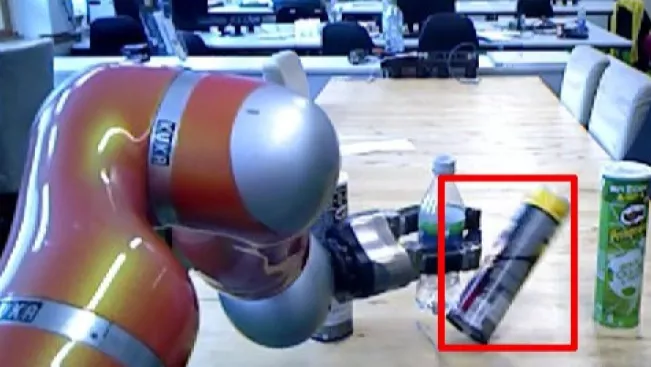
Robots are usually programmed to perform tasks by following a sequence of actions such as moving, looking, picking, etc. When something unexpected happens, a robot often cannot handle the situation because 1) it has not recognized that something has gone wrong and 2) it has not been programmed for the new situation. Recognizing such failure situations allows robots to decide whether to proceed with the task, inform a human about the problem, or try to solve the problem themselves. SANTOSH TODUKAs project focuses on developing machine learning models to detect unexpected situations that could lead to a failure of the task by using videos from the robot's camera, task information, and other sensors.
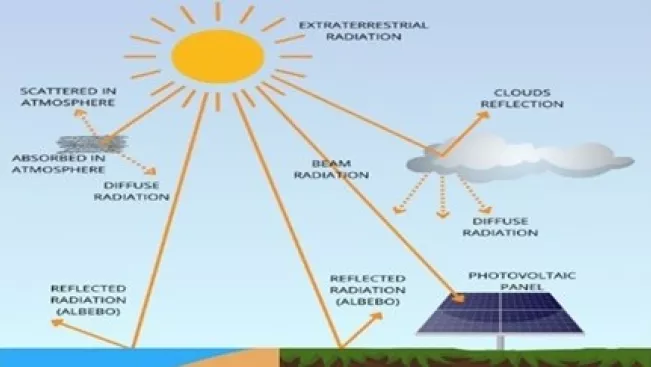
Solar power is emerging as a highly promising renewable energy resource for electricity generation in West Africa. However, the performance and efficiency of solar photovoltaic (PV) systems in the region are greatly influenced by atmospheric and near-surface aerosols. Although ground-based infrastructure for data collection and monitoring is reliable for studying the impact of aerosols on PV yield performance, their presence across West Africa is sparse and limited in the subregion, and it often suffers from limitations in spatial coverage, temporal resolution, and data consistency. To address these issues and enhance the precision and reliability of PV yield performance assessments and modelling, Benjamin Anim proposes an integrated approach that leverages aerosol reanalysis data, solar PV models, and radiative transfer models to study the impact of atmospheric and near-surface aerosols on PV yield performance in the subregion.
In the course of sustainable rethinking, it is extremely important to obtain chemical resources primarily from renewable raw materials. One possible candidate that can also be used in the long term in a wide variety of preliminary stages of the chemical industry is lignin. To this end, doctoral student Jonas Bergrath is examining various biogenic wastes (including waste wood and pomace from wine production) in order to isolate lignin that is as "green" as possible. Since lignin is extremely difficult to characterise and reproduce, he is using a wide range of analytical and computational chemistry methods to identify possible structure-property correlations. The overall goal is to link the physicochemical properties (including adsorption and behaviour in solvents) with structural elements of lignin and to use it as an adsorbent for small organic molecules (e.g. pharmaceuticals) in wastewater treatment.
Doctoral student Xuan Tung Do is investigating how to turn a centuries-old waste product into a material with superpowers. Many everyday objects are still manufactured in some form from fossil raw materials such as petroleum. As these raw materials are only available in limited quantities, scientists are searching for sustainable alternatives. To this end, doctoral student Xuan Tung Do is investigating a waste product from the paper industry: lignin. Lignin is a complex biopolymer and must first be characterised using various analytical and statistical methods before it can be used as a direct substitute for petroleum. As part of his doctoral thesis, Do is determining the molecular weight of the biopolymer using various spectroscopic and 1D and 2D chromatographic methods.

Contact Points
Centre for Science and Technology Transfer (ZWT)
Room
F 405
Vice President Research and Transfer
Campus
Sankt Augustin