Research at the university
Research Database: Projects
Forschungsprojekte (253)
Dynamic pricing models have long been commonplace in some industries, particularly in travel and flight bookings. Prices for identical products are adjusted dynamically and now in real time due to changing market conditions over time. Doctoral student LENA RECKI's research focuses on the effects of this pricing policy on consumer behaviour. With her findings, she aims to show the extent to which customers perceive and accept dynamic prices and the potential this model offers in industries such as food retail.

Due to the ongoing advance of digitalisation, it can generally be observed that all kinds of products are increasingly developing into services with fixed-term contracts (subscriptions). In this context, the term "Everything-as-a-Service" (XaaS) is often used. As a result, consumers are entering into more and more (fixed-term) contracts, which they need to keep track of (e.g. comparing, monitoring terms, etc.) and interact with providers (e.g. cancelling). To support this, there are already many apps, service providers and emerging start-ups. PhD student ERIK DETHIER is investigating how information technology can support consumers in managing their contracts, finances and thus their providers. Together with his colleagues from the Consumer Informatics Research Group, he is conducting research on consumers and their acceptance and integration of such IT into their everyday practices, as well as on the developers of such IT/apps.
Thanks to their highly sensitive sense of smell, sniffer dogs have the special ability to detect drugs, explosives, people or animals by their scent. But how sensitive are dogs and how reliable are their detections? To get to the bottom of this, doctoral student JENNIFER BRAUN is investigating methods for the quality-assured quantification of VOCs, primarily using instrumental analysis but also involving detection dogs.
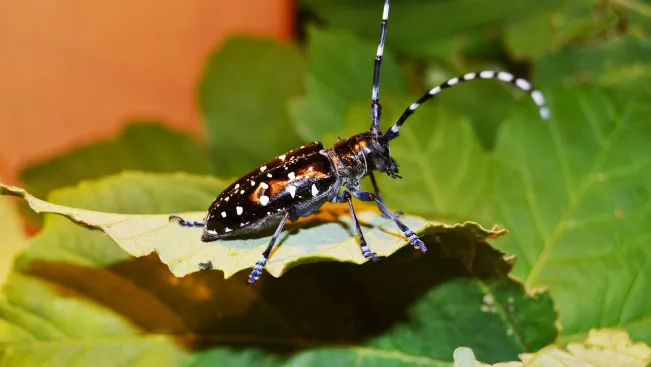
N-nitrosamines are partly volatile compounds that can be produced in many different industrial processes and are classified as carcinogenic. Due to their high health risk, there is an urgent need to develop reliable, sensitive and mobile systems for the detection and quantification of N-nitrosamines. As part of her doctoral studies, PhD student JANA HINZ is working on the development of a GC-FAIMS system, a measuring device for the rapid analysis of N-nitrosamines. This system is intended for use in various branches of industry. Compared to conventional methods, GC-FAIMS offers the advantage of being fast, portable and cost-effective.
The operation of an e-bike generates vibrations and noise, e.g. due to the functioning of the drive unit or the interaction between the rider and the bike. Dynamic effects cause excitation along individual structures up to the system level. Sound is also emitted into the environment from free surfaces. As the development of e-bikes is currently being strongly promoted and noise/vibration issues need to be better understood, a computer-aided model of the drive unit is being developed as part of KEVIN STEINBACH's doctoral thesis. The simulation model will then be used to map and predict the NVH behaviour (noise, vibration, harshness) of the drive unit. This would enable optimisation measures to be carried out on virtual prototypes and – in the interests of resource-efficient development – reduce time-consuming test samples.
Raw meat quickly shows bacterial contamination. If the contaminated meat is consumed, it can be hazardous to health above a certain amount. That is why doctoral student DANIEL KLEIN has made contamination (e.g. bacteria) visible on complex surfaces (e.g. meat). To do this, he combined spectroscopic data from IR and Raman spectroscopy from the same measurement regions to show where contamination can be found. Combining the two methods increases the information content of the data set and at the same time reduces the error rate in contamination detection.
The aim of USHA SINGH's PhD project is to improve the match between applicants and vacancies in order to minimise poor decisions in personnel selection. To this end, influencing factors that distort objective perception and can provide clues for more efficient candidate selection are being investigated. A central component of this project is the analysis of break management, particularly with regard to the effectiveness of various interventions.

Doctoral candidate Cathleen Müller conducts expert interviews with operators of coworking spaces. She evaluates these interviews using grounded theory methodology. The aim is to identify factors that influence the material and immaterial success of rural coworking spaces in Germany. The end result will be a model that represents these factors and how they work. This model is primarily intended to support practitioners and expand research on success factors to include the field of application "rural coworking spaces".
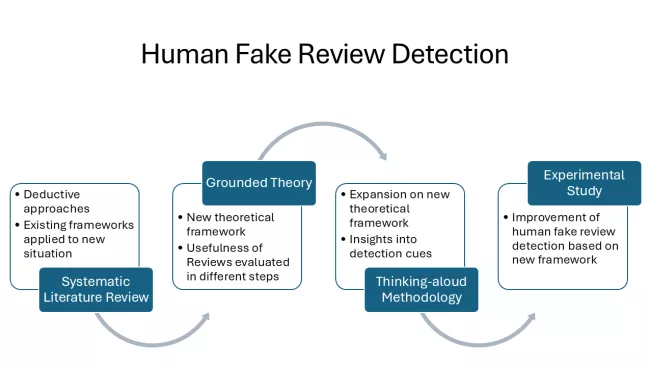
This PhD project focuses on the Research question: how do consumers detect and process fake online consumer reviews. Specifically, we develop a theory of how users process online reviews based on a combination of different methodological approaches (inductive and deductive). Using interviews, MICHELLE WALTHER developed a new theoretical framework and expanded it with a thinking-aloud study and an experimental survey. This work will provide insights into how to achieve behavioral change in consumers.
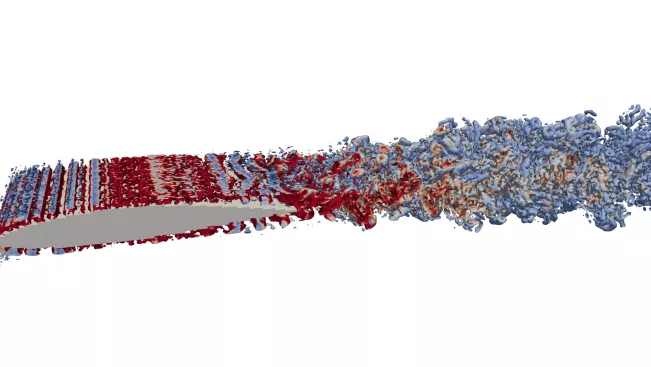
The expansion of wind turbines is essential for the energy transition. New materials and geometries are being researched to minimise noise emissions, particularly at the trailing edge of the blades. In his doctoral thesis, PHILIP SPELTEN is developing numerical optimisation methods for the development of quieter configurations using Lattice Boltzmann methods.
Contact Points
Centre for Science and Technology Transfer (ZWT)
Room
F 405
Vice President Research and Transfer
Campus
Sankt Augustin